Last week, SmarterTools had the opportunity to present at PubCon, a technology conference hosted by Webmaster World. I represented SmarterTools in a panel discussion on Cloud Computing--specifically to give our perspective as an independent software vender who is looking at writing software applications for the Cloud to be delivered as a service (SaaS). For all the hyperbola and sales pitches, this is the essence of Web 2.0. 
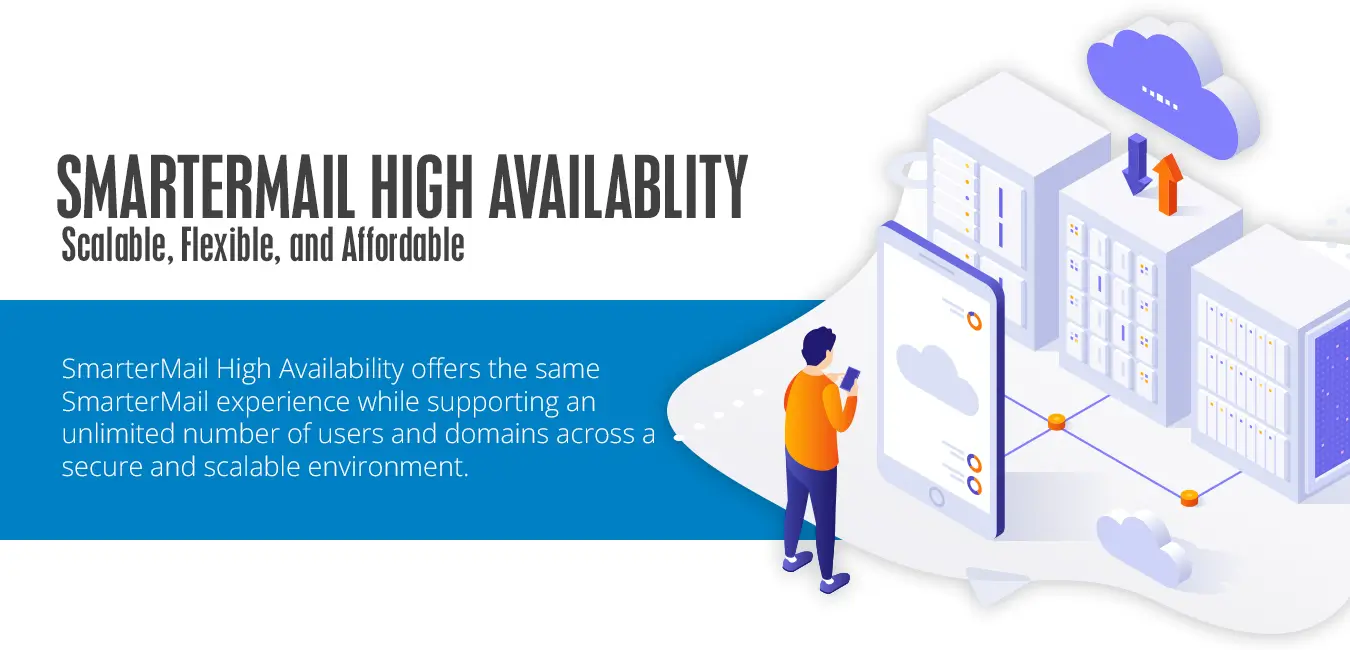
This concept has special importance for SmarterTools. We have been developing hosted applications since we were founded in 2003 and more than 15 million end users access our software through hosting providers for their email/collaboration and Web site statistics every day. In addition, we are building the infrastructure and preparing our SmarterTrack customer service software application for purchase and delivery over the Web as a service. Is Cloud something for us to consider?
Cloud Computing Options and Alternatives
We looked at all of the major Cloud Computing initiatives coming online: Microsoft Azure, Amazon Web Services, and Google Cloud Computing Service in addition to lesser-known initiatives by hosting providers such as Rackspace. We heard all of their ideas, visited their Web sites, and attended their Webinars. Then we dug deeper. For the presentation we identified 12 basic arguments used by those who are advocates of the Cloud Computing model. Then we spent time trying to determine which were real potential benefits of Cloud Computing in the near term, which were possible benefits going forward, and which were all hype. The result was a 15-20 minute Power Point presentation for our part of the panel, followed by Q & A.
Presenting the Cloud
The presentation is called Seeing Through the Fog - The Current State of Cloud Computing from an Independent Development Perspective (PDF format) and I enjoyed sharing the stage with Mike Culver from the Amazon Web Services division. My presentation covered all 12 points, but for the remainder of this post I will focus on what I think is an important misconception regarding Cloud Computing as it is constructed today.
The Biggest Misconception in Cloud Computing
In my view, the industry is fostering a misconception in the minds of the IT consumers who will ultimately be the customers of this potentially valuable service. This Cloudy issue is the perception that hosting Web sites and applications "in the Cloud" means that those sites and apps are not tied to a structure--that they are free and loose in the nebulous Internet, unencumbered by restrictions of space and geography. Even the term "Cloud" reinforces this perception.
While this may be true on a machine-to-machine level, it is not true from a broader perspective--meaning that it is important for us to remember that even Cloud Computing (as it is defined and constructed today) is tied to specific data centers operated by the Cloud vender. An application may "appear" on any single or number of servers in a data center, but they are on a server--just not necessarily the same server(s). In this way it is only a small step forward from conventional hosting environments (though rapid scalability--up and down--and reduced start-up costs are significant advantages). The technology is moving to where applications and Web sites will potentially exist in/on multiple data centers in geographically disparate locations, but there will still be a finite number of locations. This important concept changes the way we will think about true scalability, stability, performance, and security as Cloud Computing develops and gains adoption.
Cloud of Clouds
Make no mistake, Cloud Computing is a revolutionary concept that will--more than most other advances--bring us to Internet ubiquity where space and bandwidth are delivered like municipal water service or electricity. But we are still a long way from there. Remember that, in the early days of electricity, local utilities and even individual neighborhoods had vastly different ideas about how electricity should be delivered: different amperage, wattage, etc. This is a pretty good analogy for where Cloud Computing is today. Each Cloud under development is unique and incompatible. Applications and sites will need to be developed for a specific Cloud platform (an important cost-basis to consider). But this will change in the long term. As I said in Seeing Through the Fog:
"Just as the OS is being subverted by the advent of browser-based/Web-based applications, independent Cloud platforms will be subverted by the need for cross-cloud compatibility. Efficiency will demand it if Cloud computing is to ultimately succeed. Therefore there will eventually be a ‘Cloud of Clouds’ delivering computing capacity seamlessly and transparently."
It took many years for the various competing ideas on electricity to be ironed out into one standard and for appliances and other uses to adapt to that standard (those who did not adapt perished). Now, power companies share power and generating capacity without regard for geography or distance. As I type this post, the electricity consumed by my computer may have been generated by my local Arizona utility (SRP), or it may just as well be excess electricity from Nevada, Washington, or any other utility on the grid--but it is still delivered to me by SRP.
One of the problems with most contemporary Cloud Computing providers is that they still see the creation of Cloud networks as a way to "lock in" customers for other products and services--not as the viable multi-billion user access model that it might more naturally be. Amazon gets some credit in this regard because their "device-based" approach makes it a bit less complicated to migrate out of their Cloud into a more conventional hosting environment. However, Cloud to Cloud migrations are still very complex or not available at all. But I digress.
Conclusion
Cloud Computing holds a lot of promise and we believe that it is likely to be a major influence on hosting and application development. SmarterTools is preparing all of our products for potential Cloud compatibility in the future because we have confidence that the incumbent issues will be satisfactorily resolved as this new technology matures.
Jeffrey J. Hardy
All trademarks are the property of their respective owners. Microsoft Azure [MFST], Google [GOOG], Amazon [AMZN], Rackspace Hosting Inc. [RAX].